Zero is not a measurement
I spent a day on a conversion number that read zero. Three separate things were wrong, and not one of them raised an error.
10 min read
Contents
I put a small amount of money behind a Snapchat ad this week, pointed it at a landing page with one button on it, and then went looking at what came back. Arrivals were being counted. Button taps read zero.
Twenty-nine people had reached the page. None of them, apparently, had touched the only button on it.
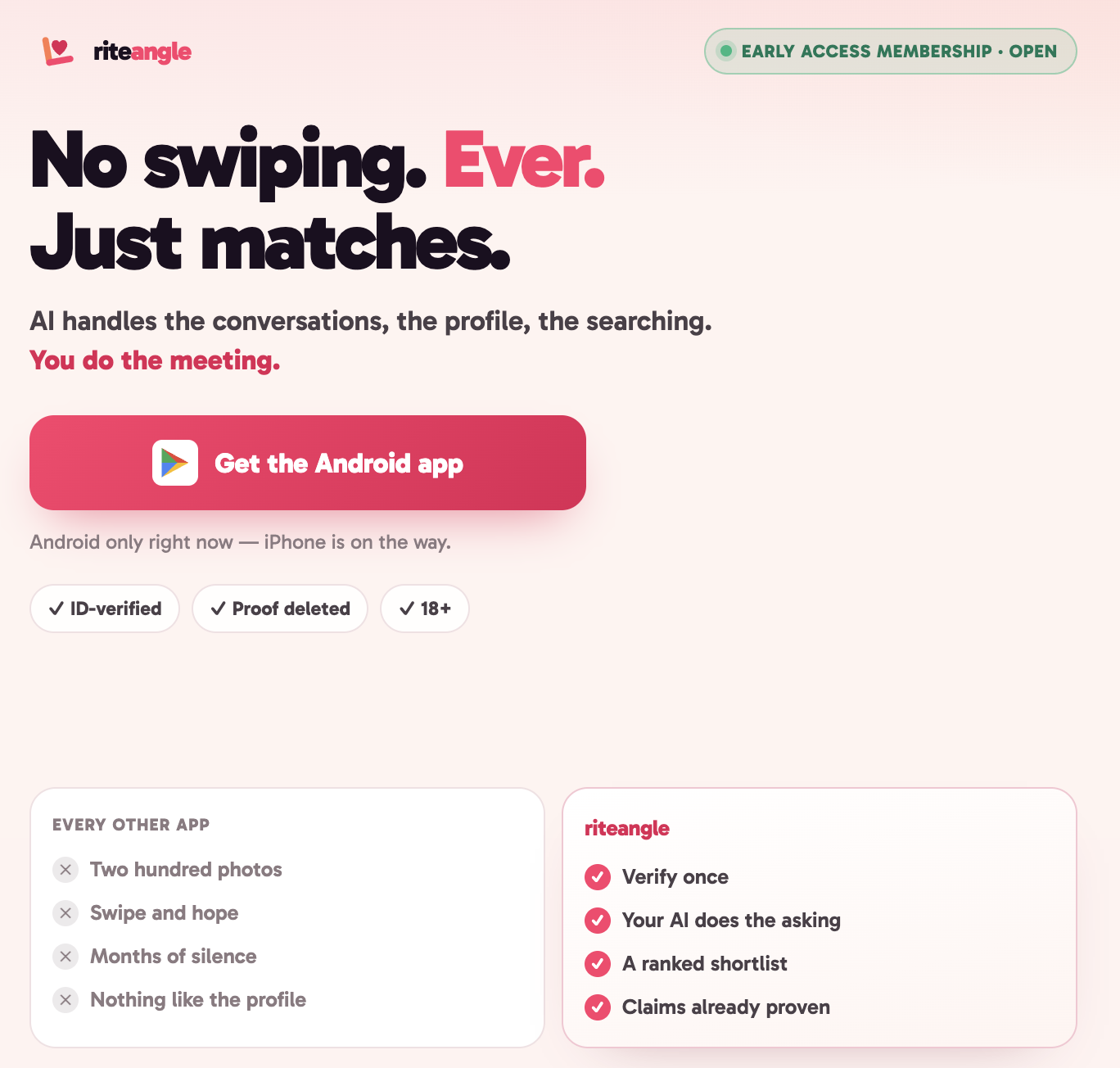
The page. There is one thing to do on it.
The obvious readings are that the page is bad or the tracking is broken. Both turned out to be wrong, and getting to that took most of a day. Three separate things were wrong. None of them produced an error, a warning, or a red box anywhere. Each one produced a number that looked fine.
Here is the whole journey, with what actually survived each step.
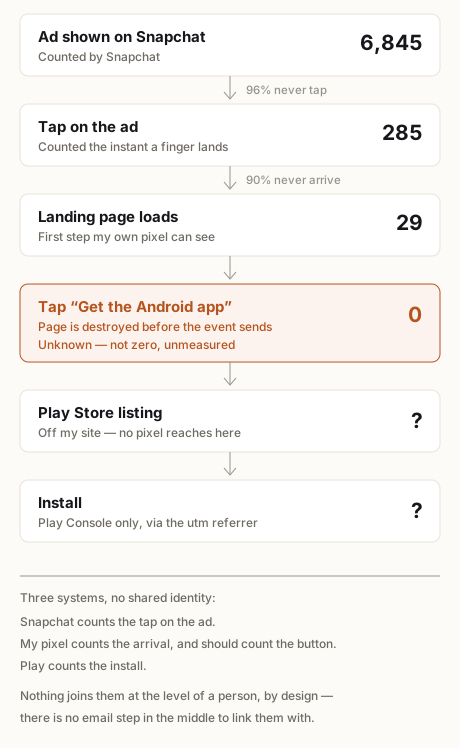
Every number above comes from a different system, and the interesting one is the zero.
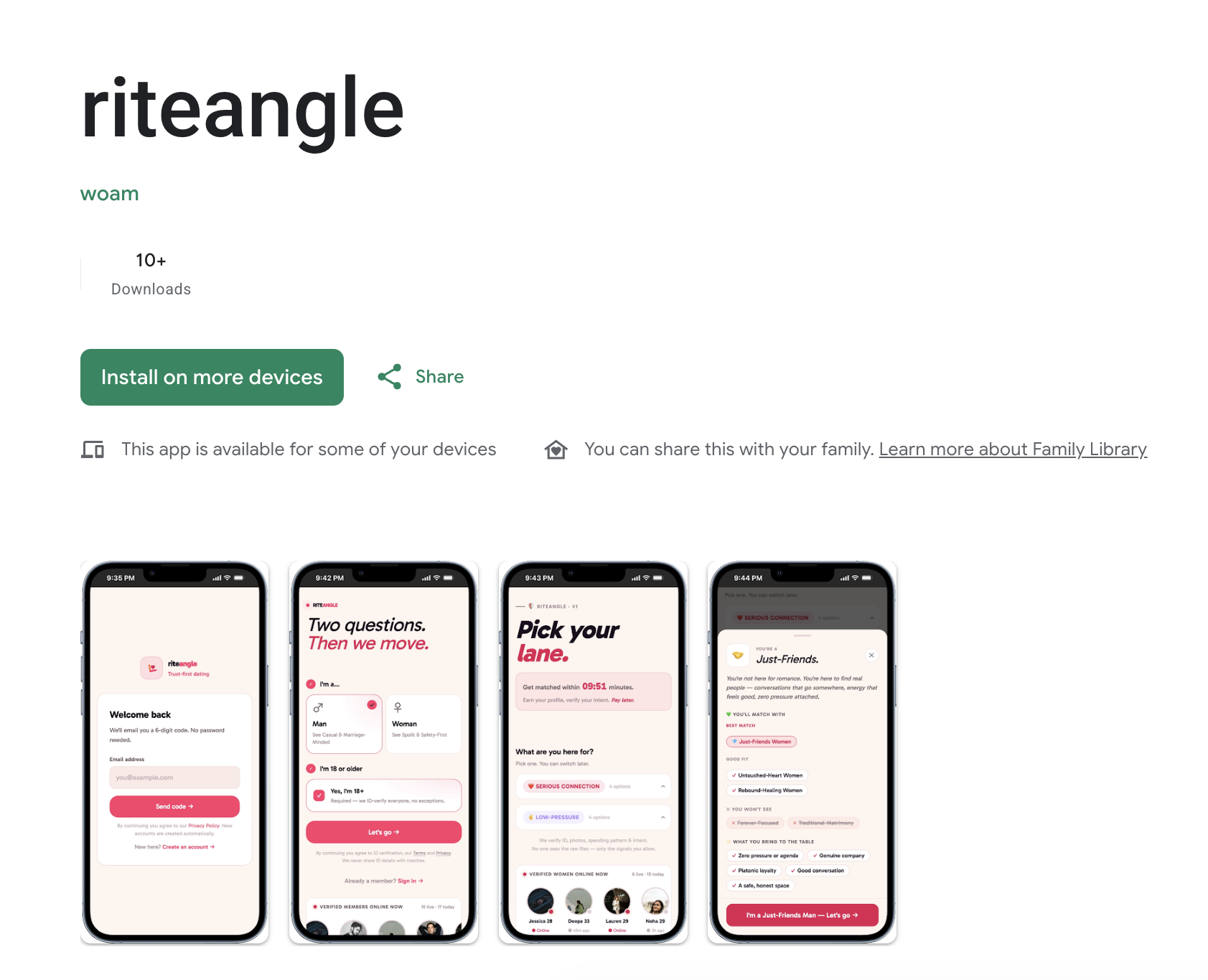
The destination. Nothing on my side can see this page, which is why the tap towards it is the last thing I can honestly measure — and why it mattered that I was not measuring it.
The event that never left
The first thing I checked was whether the tracking code was wired to the button at all. It was. I clicked the real button on the live page and watched the event go out with the right name and the right payload. So the button worked, and the number was still zero.
What I hadn't checked was when it went out.
Click fires at            6 ms
Beacon leaves at       1003 ms
The Snap Pixel does not send an event when you hand it one. It puts it in a queue and empties that queue on a timer, roughly once a second. That is a perfectly sensible thing to do — batching is cheaper than a request per event, and on most sites the page sticks around long enough that nobody notices.
My page does not stick around. Every button on it sends you to the Play Store immediately. So the real sequence is: tap, browser starts tearing down the page, and about a second later a timer tries to fire inside a page that no longer exists. The event was real. Nobody was ever told about it.
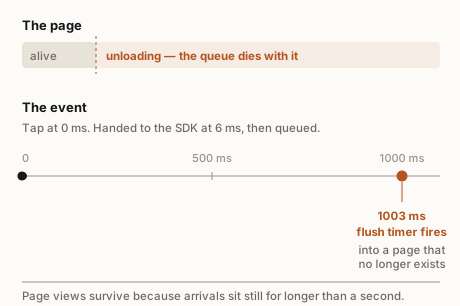
The shape of the data had been telling me this the whole time and I had read it as a coincidence:
| Event | Does the page survive it? | Recorded |
|---|---|---|
| Landing on the page | yes, they read it for a while | 29 |
| Tapping the button | no, it leaves immediately | 0 |
Same page, same script, same pixel. The only variable is whether the page outlives the thing it is trying to report. Page views survive because arrivals sit still for longer than a second. Button taps don't, because they have essentially no time left.
I have written a lot of code that assumes handing an event to a library means the event has been sent. It means the library has accepted it. Those are different, and the gap is where a page can die.
Rules I could not grep for
While I was in there I found an event I did not recognise, firing on the same page. Nothing in the repository fired it. I searched the whole codebase for the name and got nothing.
It turned out to live on Snapchat's servers. Their Pixel Setup Tool lets you open your own site in an overlay, click a button, and say "count that." What it stores is a CSS selector, and it ships that selector to your page inside the pixel's config file at runtime.
"ec": [
  { "exv": ".wrap > .cta:nth-child(4)", "et": "START_CHECKOUT" },
  { "exv": ".mid .cta",                 "et": "START_CHECKOUT" },
  { "exv": ".close .cta",               "et": "START_CHECKOUT" }
]
Three of them, bound to three of my four buttons, so those taps were being reported twice under two different names. I had created them myself, weeks earlier, clicking around the tool while trying to get something working. I had completely forgotten.
Two things about this bother me more than the double-counting.
The first is that .wrap > .cta:nth-child(4) is a positional selector. Reorder
anything in that section and it silently binds to a different element, or
nothing at all. My markup is now load-bearing for a system that has no idea when
I change it, and won't tell me when it breaks.
The second is that I could not have found this by reading my own code. There is no file, no config entry, no import. The only way to see it is to fetch the vendor's config file and read it. That is a real category of state — behaviour that runs on your page, that you own, that your repository knows nothing about. I don't have a good general answer for it beyond knowing it exists.
Removing them had its own small joke at the end: the setup tool refuses to save an empty event set. The button greys out the moment you delete the last rule. I had to create one deliberately inert rule, pointed at a URL that doesn't exist, so the tool would let me publish a configuration with nothing real in it.
Clicks are not arrivals
The third thing was not a bug, just a number meaning something other than what it says.
I had bought 285 clicks. Twenty-nine people arrived. That is a 90% loss between paying for a tap and anyone reaching the page.
Snapchat counts a click at the instant a finger lands on the ad. Everything after that — the in-app browser opening, the network, the page loading — is loss it never sees. And Snapchat is an app where people tap constantly to skip forward. An ad appears, the thumb is already moving, that counts.
The tell was the cost. Clicks were coming in at about a quarter of a rupee. Real visitors, on the one campaign I had set to optimise for arrivals rather than taps, cost around three rupees. When one of your metrics is twelve times cheaper than the thing it is supposed to approximate, it is not a bargain.
The split across three ads made it obvious:
| Optimised for | Arrival rate |
|---|---|
| Clicks | 8.3% |
| Clicks | 7.7% |
| Landing page views | 46.7% |
Same site, same speed, same pixel. One ad is nearly six times better at turning a tap into a visitor, and the only difference is what I asked Snapchat to go and find. I asked two of them for cheap taps and got exactly that. The algorithm was not wrong. My instruction was.
The thing they have in common
None of these three failures raised an error.
The queued event that never sent produced a zero. The forgotten selector rules produced a plausible-looking event with real counts behind it. The clicks that never arrived produced an excellent cost-per-click. Every one of them was a confident number sitting in a dashboard, formatted identically to the numbers that were true.
A zero that means "this did not happen" and a zero that means "nobody was watching" render the same. I don't think there's a clever fix for that. What changed for me is smaller and duller: when a measurement says nothing happened, I now spend the first hour proving the measurement could have fired, before I spend any time on why the thing didn't happen. On this occasion that would have saved most of a day.
What I actually changed
I made the buttons open the store in a new context, so the page survives long enough for the queue to flush. It is one attribute. I have documented at some length in the source why it is load-bearing, because it reads exactly like something a tidy-minded person would delete.
I have not verified it works. It behaves correctly in a normal browser, but the traffic arrives through an in-app browser inside a social app, and those don't always honour it. The honest position is that I've made a change I believe in and haven't proven yet, and the only test that counts is a real phone on a real ad. If it fails, the durable answer is to report the event from my server instead of from a page that is in the middle of being destroyed, which is where this probably should have been all along.
The other two I fixed properly. The selector rules are gone. The campaigns are being pointed at arrivals rather than taps — and I'm running that as a test rather than a certainty, because my own data is not unanimous that it's an improvement.
Small money, small numbers. But I would have drawn a confident and completely wrong conclusion from all of it, which is the part worth writing down.
Update, later the same day
I ran the test. It was inconclusive, which I did not expect to be an option.
The problem was that I had no clean way to read the answer. The dashboard batches with about twenty minutes of lag, the event already sat at eleven from my own probing earlier in the day, and one real tap moves eleven to twelve. That is indistinguishable from noise. I had built a test whose result I could not see, which is the same species of mistake as the one the post is about.
So I stopped trying to verify the browser fix and removed my dependence on it.
The button now also posts the tap to my own server, using keepalive: true —
a flag whose entire purpose is that the browser must finish the request even
after the page is gone. The server does the reporting from somewhere that is
not being destroyed, writes a row I own, and forwards to the ad networks from
there. Same tap, one id, sent to each network twice so they collapse it into a
single conversion rather than counting it twice.
Then I tapped the button on a real phone, through a real ad, and read my own table:
campaign:   get_lp
user_agent: ... Android 16; CPH2649 ...; wv) ... Chrome/150 Mobile Safari/537.36
            Snapchat/14.18.0.46 (CPH2649; Android 16 ...)
referrer:   https://www.snapchat.com/
wv is an Android WebView. Snapchat/14.18.0.46 is Snapchat's in-app browser.
That is the exact environment that had been eating the event, and the tap is
now recorded — with no dashboard involved, no twenty-minute wait, and nothing
to squint at.
I still do not know whether target="_blank" works, and I have stopped caring,
which was the point. A measurement that depends on a browser honouring an
attribute is a measurement you have to trust. One that arrives at your own
server is one you can read.
The line in that row that stings is campaign: get_lp. That is a fallback my
code uses when the incoming URL carries no campaign tags — and it turned out
none of my ads had ever set any. Every conversion I had, on every platform, was
labelled with the same placeholder. I had spent a day making sure I could count
taps accurately and had never noticed I could not tell which ad produced them.
There is more of that story than fits here, so I wrote up the whole arrangement separately: what it takes to measure one tap.